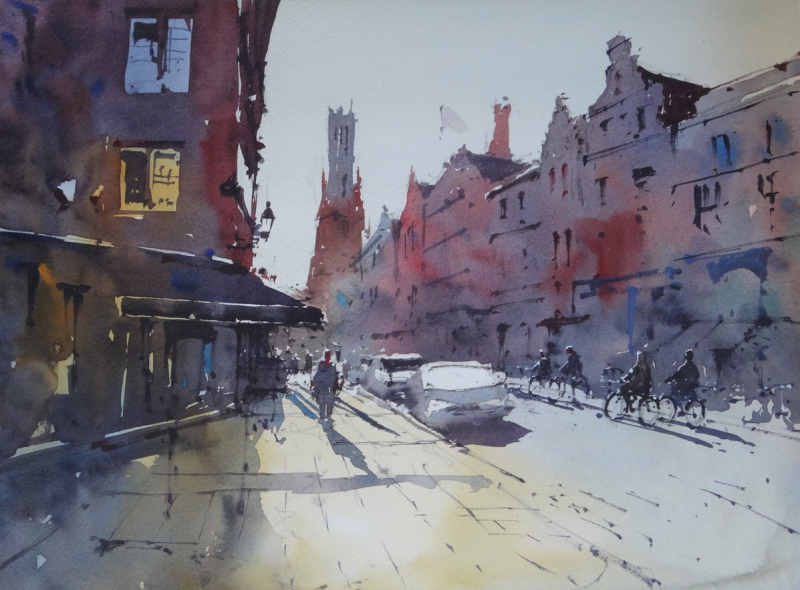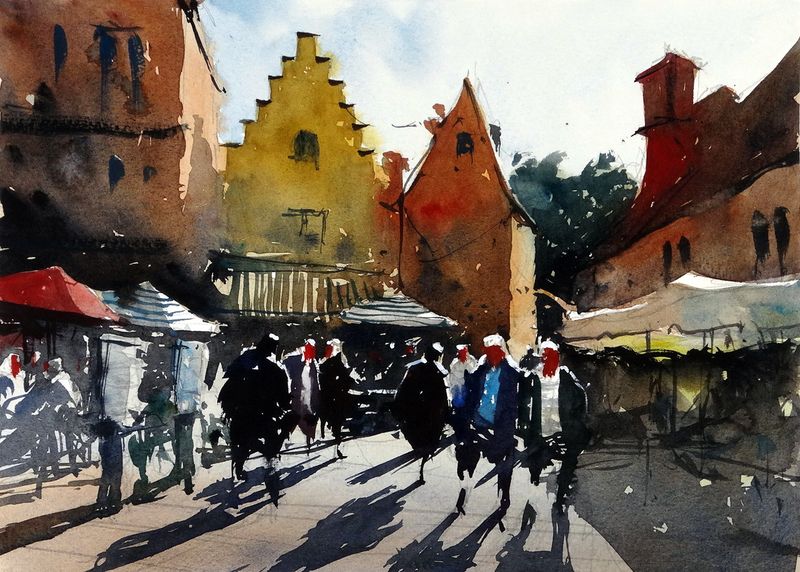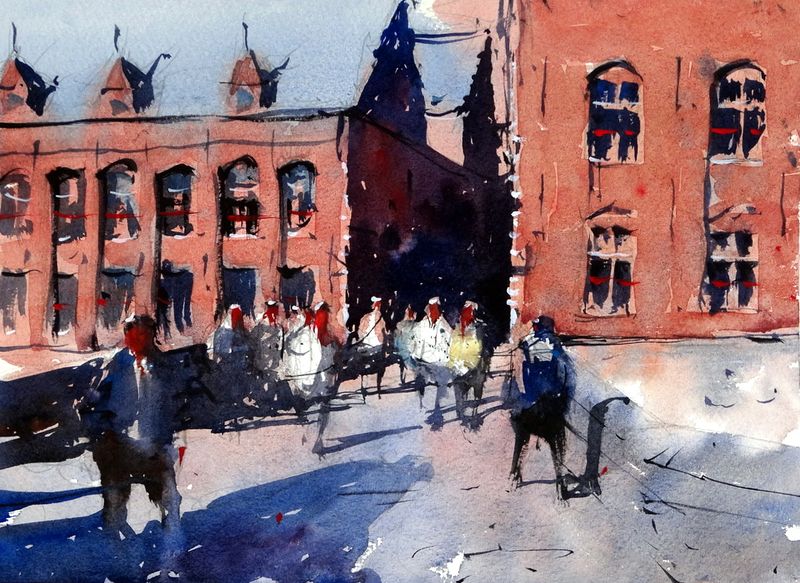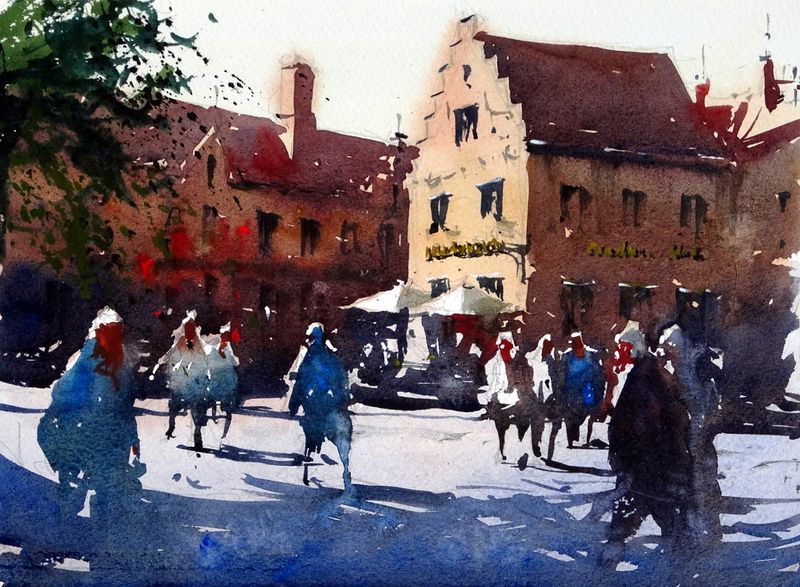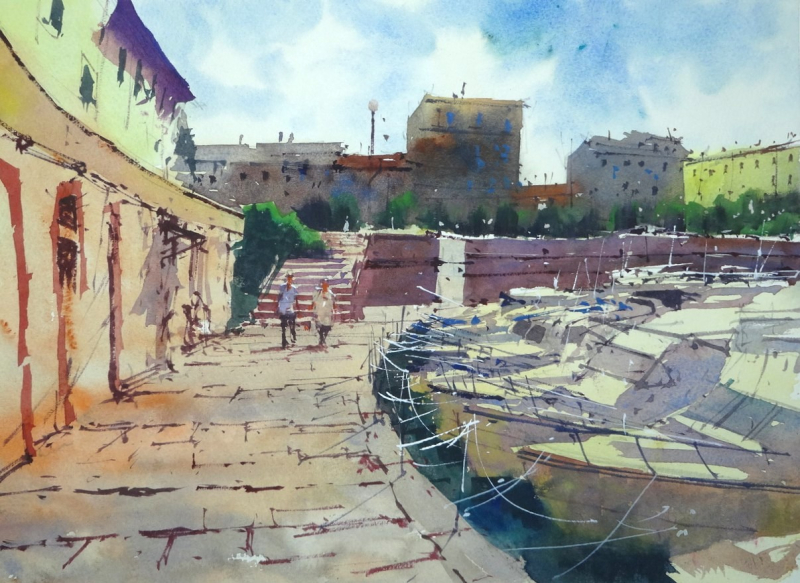
The canal area of Livorno, especially near Piazza Garibaldi, is a fascinating subject for watercolour painting, full of history, character, and architectural variety. As I wandered through this part of the city, I found myself drawn to the interplay of old stone, bustling water, and the unique light that seems to dance off the canal’s surface.
Piazza Garibaldi itself is a large, rather empty square, flanked by statues and surrounded by buildings that reflect the city’s layered past. From here, heading down Via degli Avvalorati, you quickly reach the canal and the imposing Fortezza Nuova. This fortress, built by the Medici in the 16th century, was part of their grand plan to transform Livorno into a major Mediterranean port. Its pentagonal shape, surrounded by water, offers a striking subject, especially with the reflections of its red-brick walls and the greenery that now softens its military lines.
As you walk along the canal from this point, you pass a mix of old and new. Some buildings are stark and utilitarian, remnants of pre-WWII architecture, while others are ornate, with faded facades and shuttered windows that hint at the city’s more prosperous days. The area is sometimes described as rugged, but I find this only adds to its charm. There’s a sense of real life here-boats moored along the banks, fishermen chatting, laundry fluttering from balconies, and the hustle of daily commerce, especially near the Mercato Centrale. This grand market building, with its delivery platform at water level, is a reminder of how integral the canal has been to Livorno’s commercial life.
The canal itself, known as the Fosso Reale or Royal Canal, was originally part of the city’s defensive system. Over time, it became a vital artery for trade, with goods transported right up to the warehouses and palazzi that line its banks. Many of these buildings have cellars that open directly onto the water, a feature that makes for interesting compositions, especially when the light catches the arches and creates deep, mysterious shadows.
Continuing along the canal, you’ll find yourself in the Venezia Nuova district, sometimes called “Little Venice.” Here, the network of canals is at its most picturesque, with narrow waterways, arched bridges, and a jumble of architectural styles. Notable buildings include the Palazzo Huigens, Palazzo Scali Rosciano, and the Church of San Ferdinando, all of which offer elegant lines and decorative details that are a delight to capture in watercolour.
One of my favourite spots is the stretch near the Piazza della Repubblica. This vast square actually sits atop part of the canal, which continues to flow beneath its 240-metre length. The monumental scale of the piazza, with its statues and sweeping views, contrasts beautifully with the intimate, almost secretive feel of the canal below.
For anyone interested in painting or sketching this area, I recommend taking a canal boat tour. It gives you a unique perspective on the buildings, many of which are best seen from the water. The changing angles, reflections, and play of light are endlessly inspiring-perfect for capturing in loose washes and expressive brushwork.
The canal area of Livorno is not conventionally beautiful, but it is full of atmosphere and stories. The mix of architectural styles, the weathered facades, and the ever-present water create a setting that invites exploration and rewards the patient observer with scenes of quiet poetry and unexpected grandeur.
If you’d like to see how I interpret these scenes in watercolour, or if you’re interested in learning more about painting urban waterfronts, do visit my website at www.timwilmotartist.com.